Share this

When you hit the slopes, there are generally a few different types of terrain you’ll likely be encountering, depending on the mountain, temperatures, season, and even time of day. During the heart of the season, you’re likely skiing or riding on machine-groomed runs, hard pack snow, or powder. In some cases it may be ice, and in the spring, you’re often encountering corn snow. Yet with all these different types of surfaces, it still just doesn’t get better than skiing on powder. But what exactly is it that makes skiing in powder so much better?
Well it depends on who you ask. Powder is what many skiers live for, to feel that weightlessness, softness and smoothness of skiing through fresh, natural snow. However, for beginners, and even some winter athletes, skiing on groomers has its advantages. At the 2022 Beijing Winter Olympics, for example, all competitions were almost entirely on artificial snow. Nevertheless, the majority of advanced, and even many intermediate skiers will agree that nothing beats skiing or riding through powder.
The Science of Skiing in Powder
The short answer of why skiing on powder is better is because it’s science. While artificial snow may resemble snow to the common person, it’s going to feel different when you’re skiing on it. Natural snow provides skiers and snowboarders a more weightless feeling as they cruise down the mountain because natural snow crystals stack very loosely on top of one another. A fresh layer of powder can often predominantly be air after all. Naturally then, it feels so much softer and lighter to ski through.
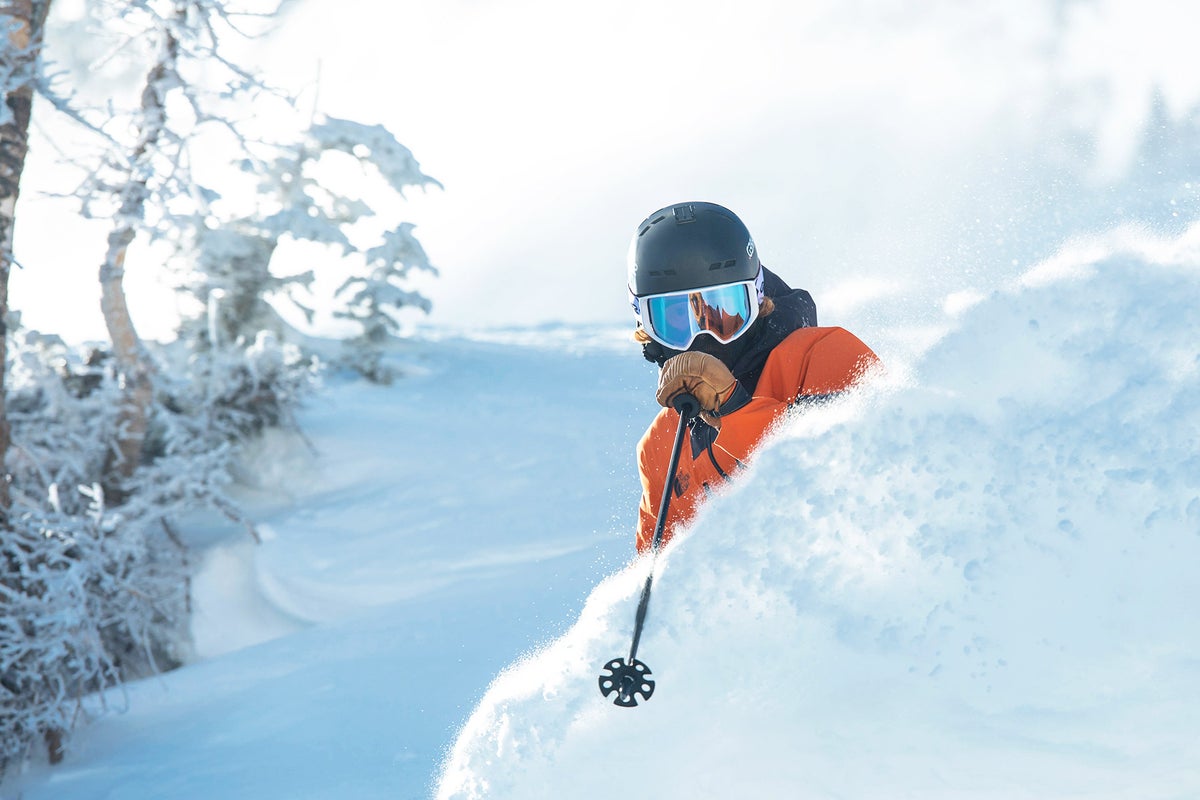
Ultimately, temperature and altitude plays a major role. This is why the powder you ski on in California, for example, is often much different than the powder you ski on in Utah. Snow crystals form differently depending on the altitude and air temperature they fall through. Very cold air produces small, dry, intricate crystals that stack loosely with lots of trapped air between them. This is what gives Rocky Mountain and Wasatch powder its famous lightness. Warmer storms, closer to freezing, produce heavier, wetter crystals that pack more densely and hold more water, which is why Sierra Nevada and coastal ranges tend to get the “Sierra cement” reputation. That’s also why the same storm can drop dramatically different snow at the base of a mountain versus the summit. A difference of just a few degrees in air temperature changes the crystal structure enough to turn fluffy powder into heavier, wetter snow.
Traditionally, there are two kinds of powder skiing. At ski resorts, resort powder lies over a firm base, with skis often penetrating through the new snow to the surface underneath. The powder cushions the old surface and controls the skier’s speed. However, a more thrilling and satisfying version of powder skiing may seem bottomless. When there’s no underlying surface to push against, skiers rely on speed to float through powder on their skis or snowboard. This is what you’re more likely to find when heliskiing, skiing glades, or on a snowcat tour.
Whether skiing on fresh powder at a ski resort, or skiing in the backcountry, a majority of recreational skiers agree that skiing on powder is superior. It’s no surprise that powder days are so revered.
Tips for Skiing on Powder From Experts
Like anything else in life, it’s great to get some expert tips so we can start out right and get better and better. We asked Kevin Jordan of the Snowmass Ski School at Aspen Snowmass for his tips for skiing in powder. In talking with Jordan, he shared that there’s a common misconception among many people who think you have to lean back to ski in powder. The reason for the myth, says Kevin, is because many people think you need your ski tips out of the snow. Instead, he says, “Try being centered over your foot and let the snow compress underneath you. Think center of your foot versus leaning back.”
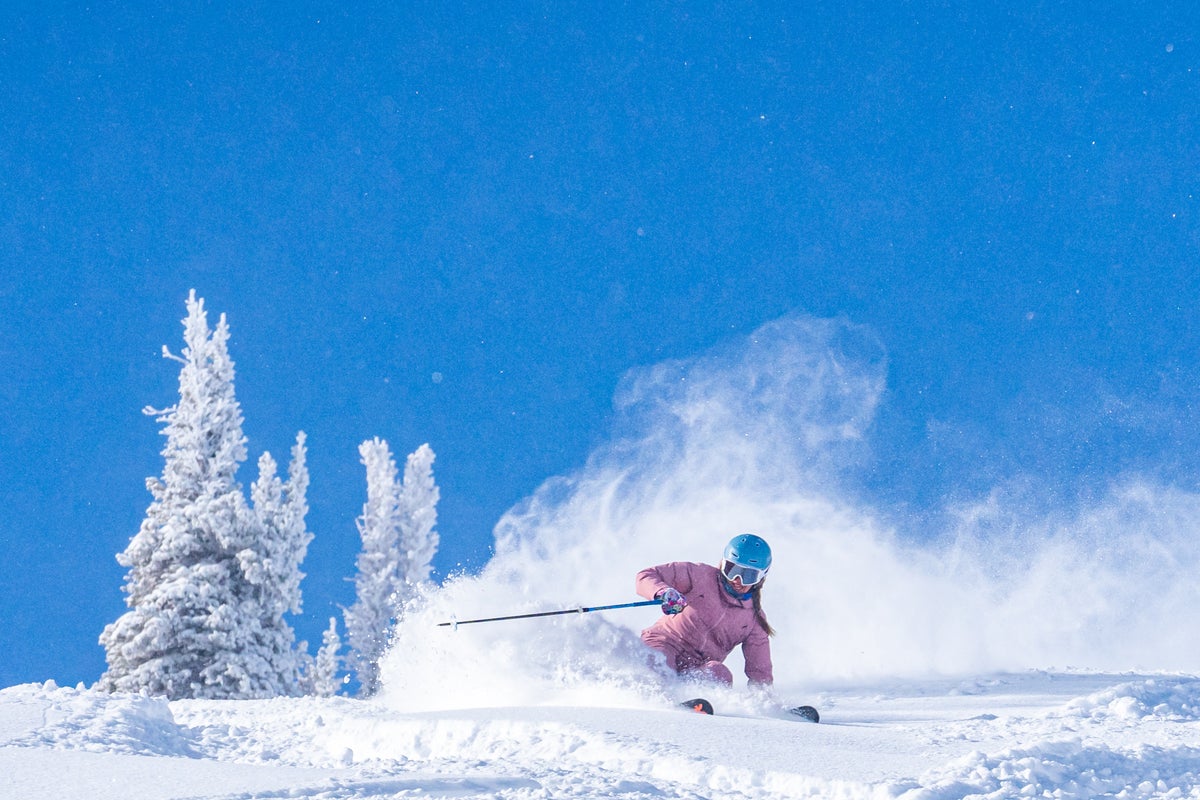
The water content of snow can vary from ski region to ski region and sometimes from resort to resort. Kevin suggests bouncing a couple of times before you start turning to see what kind of snow you are getting at that moment. “Some powder snow can be very light and dry (such as Colorado and Utah),” he says. “Other powder snow can be dense (such as Mammoth Mountain or the Lake Tahoe resorts) with more water content.”
Finally, one of the most important considerations for powder skiing is turning. Kevin suggests getting up to speed before you start turning.”Since there is more resistance in powder snow because it takes more time to compact underneath you, skiers may ski steeper runs or need to ski straight for a little bit before turning,” he says.
Choosing Skis for Powder Skiing
But properly skiing in powder doesn’t just come down to skills and ability. Skis make a difference, too. “Wider skis have more surface area and tend to plane, like a boat would in water, but better in the snow,” Jordan says. He continues, “If you have an opportunity to try wider skis on a powder day, do it.”
When it comes to choosing skis, many skiers (particularly those who live on hardpack and only get to ski powder once or twice each season) prefer to find an all-mountain ski that performs perfectly in powder. Our guide here is a good introduction to shopping for skis.
Hero image ©Sofia Jaramillo/Sun Valley
 September 07, 2026